


Are you a shop-by-category site or a shop-by-use case site?
Do you even know how to answer that question?
Every ecommerce website has a dominant decision-making process for guiding users through the site. The correct approach depends on desired outcomes, catalog size, customer familiarity with the product, and order quantities.
If you want to provide a customer-centric experience, it is vital to get this right.
So where do you begin? Here is an example we did with MobileMustHave in Q2 of this year.
Our Research
MobileMustHave is a one-stop shop for RVers. You can buy everything short of the RV itself from them.
When we dove into our CRO program, we were able to quickly validate a few key user groups through qualitative data:
- Vacationers who use their RV a few weeks/months a year
- Full-timers who spend the majority of the year on the road
- Digital nomads who lean more toward van-lifers than RVers, but use MMH for essentials like internet, power, and water
Understanding Customer Anxiety
Combining this knowledge with additional review and chat logs and it became pretty clear that most customers are not technical enough to trust that they are buying the right product (or version of a product).
Many post-purchase surveys shared some version of "I hope I got everything I need."
That VoC data led us to double down on testing multiple versions of the "shop by use case" concept. Previously they had only shown "shop by category" options that spoke to particular user problems (flat tires, water filtration, etc.) but never anything that packaged it all together.
Validating this idea in conjunction with underlying collections and pre-built bundles had a chance to be a game changer for them.
The Test Concepts
To validate this insight, we ran multiple rounds of testing:
- One adding the "shop by use case" versus the existing categories
- One testing different designs of "shop by use case"
- One testing "shop by use case" against an icon-led "shop by category" design which performed well with other clients
Test Experiences
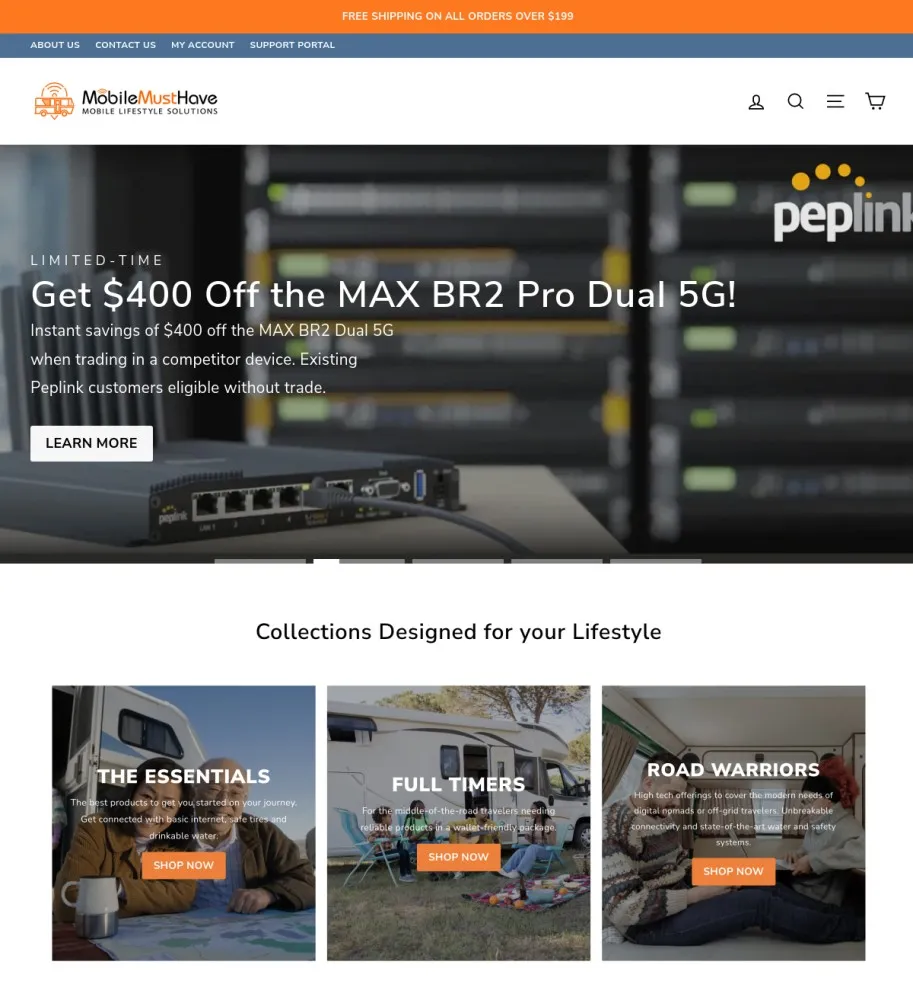
- Shop by Lifestyle - Image Heavy Version
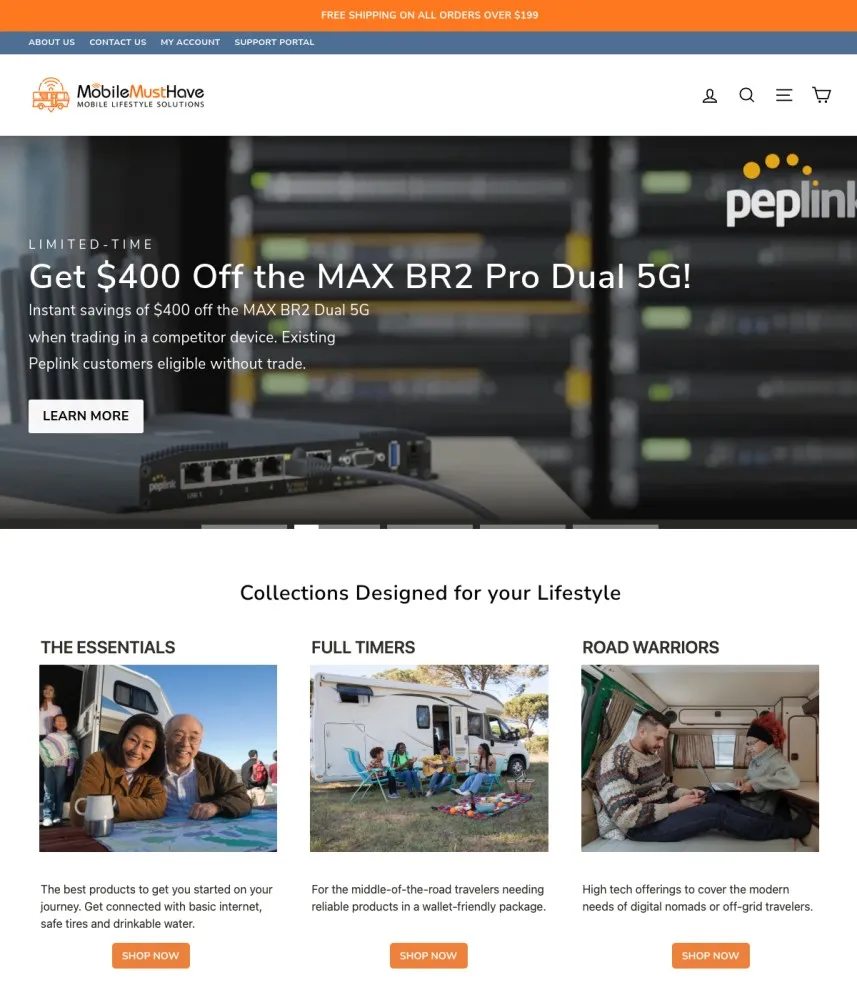
- Shop by Lifestyle - Image + Text Version
- Shop By Categories - Icon-led Design
Our Goal With the Test
To validate that encouraging users to shop by their "lifestyle" use case will create a better experience and lead to higher conversion rates.
Metrics
Primary:
- Conversion Rate
Secondary:
- Collection Page Views
- Product Page Views
- Adds to Cart
The Test Results
In every test, the "lifestyles" shop by use case variant outperformed all challengers.
- Compared to the original categories block: ↑ 8% in CVR
- Compared to the icon-led categories block: ↑ 12% in CVR
- Comparing image overlay lifestyles block to text + image block: ↑ 3% in CVR
Takeaways: Why Shop by Use Case Won
After multiple rounds of testing, allowing users to shop for their particular lifestyle use case was the correct way to go. Our post-mortem on why this worked so well is as follows:
- The product catalog is spec heavy
- Selecting the right product is a natural anxiety for users
- The average order quantity was double what we see with most clients
Knowing that users have to purchase several items to achieve the desired result but aren't confident about their ability is a serious hurdle. Highlighting these lifestyle use cases and providing pre-built bundles inside those collections made the decision-making process far more manageable.
When to Use Shop by Use Case vs Shop by Category
What worked here for MMH may not work for every brand.
However, we think shop by use case is worth serious consideration for brands with the following characteristics:
- Higher priced items
- Average order quantities >2
- Users who arrive with a clear end goal but minimal expertise on how to get there
Shop by Category Works Best For:
- Single-item purchases
- Customers who know exactly what they want
- Simple product catalogs with minimal technical specifications
- Brands where customers have high product familiarity
Shop by Use Case Works Best For:
- Multi-item purchases or bundles
- Complex product catalogs with technical specifications
- Customers who know their goal but not the specific products needed
- Situations where product selection creates customer anxiety
Conclusion
The decision between shop by category and shop by use case isn't just a design preference—it's a strategic choice that can significantly impact your conversion rates. By understanding your customers' decision-making process, order patterns, and product knowledge, you can create a navigation structure that guides them confidently toward purchase.
Don't guess. Test both approaches with your audience and let the data guide your decision.

%201.svg)
